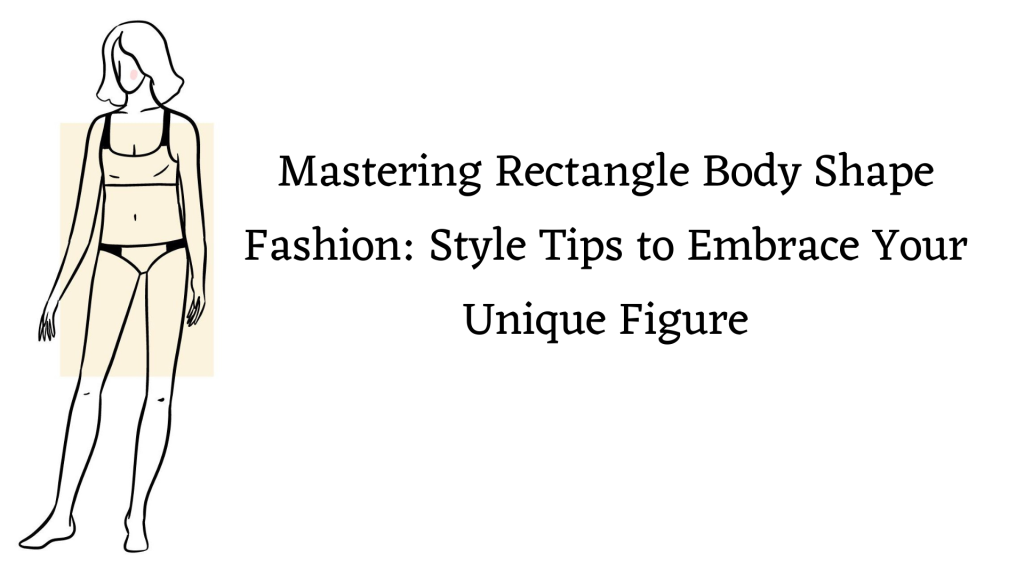
Knowing your body type and dressing accordingly makes both shopping and your daily routine a lot easier. In this post, we focus on the pear body shape and how to put together outfits that work with its proportions. Keep reading to find out which clothing combinations consistently deliver the best results.
The pear body shape — also called the triangle shape — is one of the most common body types among women. The key characteristics are wider hips and thighs, narrower shoulders, a smaller bust, and a well-defined waist. The lower body is more prominent than the upper body, and that’s the imbalance we’re working with.
The goal, as with any body type, is to get as close as possible to the hourglass silhouette — a balanced shoulder-to-hip ratio with a defined waist. The formulas below are all built around that principle.
What Makes a Pear Body Shape Outfit Work
For this body shape, the upper body benefits most from visual reinforcement. That means adding width at the shoulder line, keeping the waist visible, and avoiding anything that draws extra attention to the hips and thighs. The ten combinations below apply these principles in different ways depending on the occasion and your personal style.
10 Outfit Formulas for the Pear Body Shape
1. The Statement Top + Dark Slim Bottoms
A top with clear visual interest — a bold color, ruffles, an embellished neckline, or a strong print — pulls attention to the upper body, while dark slim jeans or trousers keep the lower half clean and uncluttered. The contrast between a busy top and sleek dark bottoms does most of the proportional work on its own.
Styling tip: Tuck the top in at the front to keep the waist visible and avoid adding bulk at the hip line.

2. The Wrap Dress
The wrap dress handles several things at once: the V-neckline adds visual width to the chest and shoulders, the tie defines the waist, and the skirt skims over the hips without pulling or bunching. It’s one of the more reliable single-piece options for this body type precisely because the proportional logic is built into the cut.
Styling tip: Look for styles where the waist tie creates a defined cinch rather than a loose, open drape.

3. The Structured Blazer
A well-cut blazer broadens the shoulder line and adds structure to the upper body, which directly addresses the narrower shoulders typical of the pear shape. Worn over a simple top with slim trousers or dark jeans, it creates a strong, balanced silhouette with minimal effort.
Styling tip: A single-button blazer with a slightly nipped waist works better than a boxy cut — the latter adds width everywhere rather than where you actually want it.

4. The A-Line Skirt + Fitted Top
A-line skirts flare gently from the waist, which means they skim over the hips without clinging. High-waisted styles are particularly effective because they draw attention to the slim waist before the skirt widens below it. A fitted top on top keeps the proportions clean.
Styling tip: A midi-length A-line in a solid color paired with a fitted turtleneck or slim knit is a straightforward combination that works across seasons.

5. The Off-Shoulder Top
Off-shoulder and cold-shoulder tops expose the collarbone and widen the visual line across the shoulders, which is exactly what the pear shape benefits from on top. It’s one of the more direct ways to add perceived width to the upper body without relying on structure or layering.
Styling tip: A slightly relaxed fit works better than a tight strapless style — it sits more naturally and doesn’t pull across the bust.

6. The Wide-Leg Trouser Look
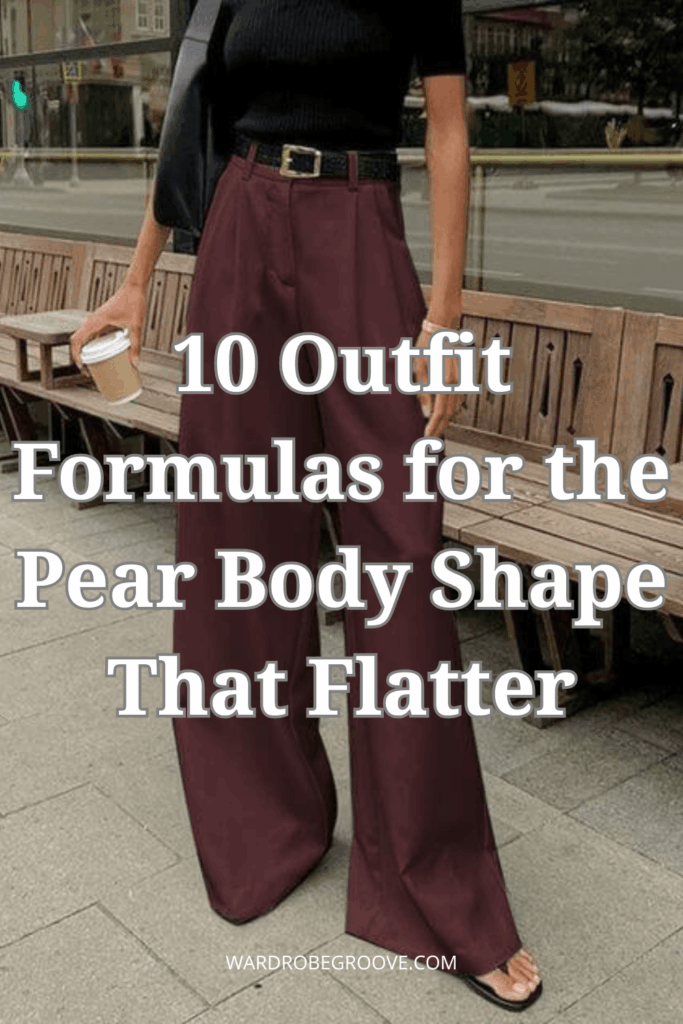
Wide-leg trousers are a practical option for the pear shape. When the leg opening is close to the hip width, the silhouette reads as one long, unbroken line rather than widening at the hip and narrowing below. Keep the top fitted to maintain the balance between upper and lower half.
Styling tip: High-waisted styles are the better choice — they lengthen the torso, highlight the waist, and give the whole look cleaner proportions.
7. The Fit-and-Flare Dress
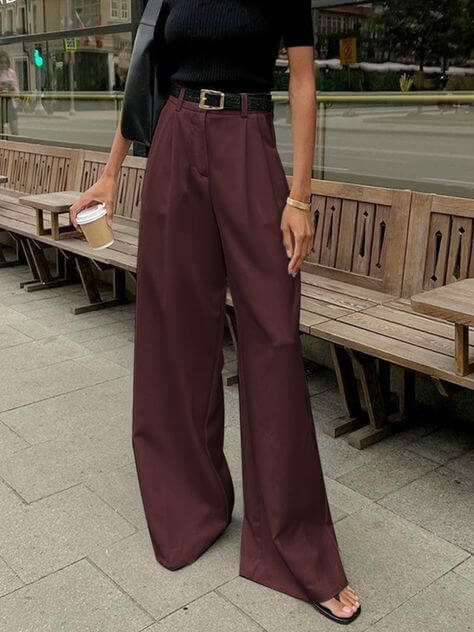
The fit-and-flare cut follows the bodice closely through the waist, then flares out below the hip — which makes it well-suited to the pear shape because it defines the waist clearly before moving over the fuller hip area. It works in both casual and formal contexts depending on fabric and length.
Styling tip: Look for styles where the flare begins at or just below the natural waist rather than at the hip — this keeps the waist definition visible.
8. The Color-Block Strategy
Lighter and brighter colors advance visually; darker shades recede. Wearing a bolder or lighter color on top and a darker neutral below naturally draws the eye upward. It doesn’t require a deliberately color-blocked outfit — a white blouse with charcoal trousers or a bright knit with dark jeans applies the same logic.
Styling tip: Keep the top tucked or cropped so the color contrast at the waist stays visible rather than blending into one long line.

9. The Belted Trench Coat
A belted trench coat defines the waist and skims over the hips, making it one of the more flattering outerwear options for the pear shape. The structured shoulders add width to the upper body, and the belt does the waist work without any additional layering underneath.
Styling tip: Tie or buckle the belt at the natural waist rather than lower — belting at the hip defeats the purpose and visually widens the widest point.

10. The Monochrome Look
Dressing in one color from head to toe removes the color contrast at the hip line that can otherwise draw attention there, and creates a single unbroken vertical line that elongates the silhouette. For pear shapes, this works best in darker or mid-toned colors — deep navy, camel, chocolate, or burgundy — where the tonal consistency is most flattering.
Styling tip: Vary the textures within the monochrome outfit to keep it visually interesting — for example, a knit top with tailored trousers in the same shade.

A Few Things to Avoid
Tops that end exactly at the hip line widen the widest point of the body — avoid them. V-necklines narrow the shoulders rather than widening them, so they work against the proportional goal here. Low-rise bottoms and extra embellishment around the hips and thighs — ruffles, large pockets, bold patterns below the waist — also tend to draw attention to exactly the area you’re working to balance out.
Once you understand the basic logic behind these formulas, putting outfits together for this body type gets considerably more straightforward. These ten combinations are a reliable starting point, and from there you’ll develop a clearer instinct for what works for your specific proportions.
Complete your style transformation by exploring my comprehensive body type guides for apple, pear, inverted triangle, rectangle, and hourglass figures to discover the perfect styling tips for your unique shape.
Photo source: Pinterest