Which Christmas Colors Suit the Autumn Color Season?
Autumn is the season that already owns half of the holiday palette: rich reds, deep greens, and plenty of gold. The trouble is the other half. Icy emerald, silver tinsel, stark white, and cherry red are everywhere in December, and all of them pull against a warm complexion. This post shows which red, green, and gold to wear for Christmas outfits for Autumn color season, and which versions to leave on the rack.
First, what the Autumn color season actually is. Autumn is a warm-based season with rich, earthy coloring, meaning golden or warm undertones that look best in colors with warmth built in. If you’re not sure that’s you, start with my Autumn color season guide and come back.
Below are five groups of Christmas colors. In each one, the question is the same: which version of this color is made for your season?
1. Red: Brick, Tomato, and Warm Oxblood
Autumns wear red with warmth in it: brick, tomato, or rust-red, and a warm oxblood or wine for evenings. These are the reds that look like Christmas on you without fighting your undertone.
Most Christmas outfits for Autumn color season go wrong at the first color, and the culprit is a blue-based red. Cherry, raspberry, and cool ruby clash with a golden undertone, and they can turn the skin ashy or give it a ruddy edge. A red with orange or brown in it does the opposite and makes the skin look warm and healthy. Of all five groups, red is where the swap is most dramatic.
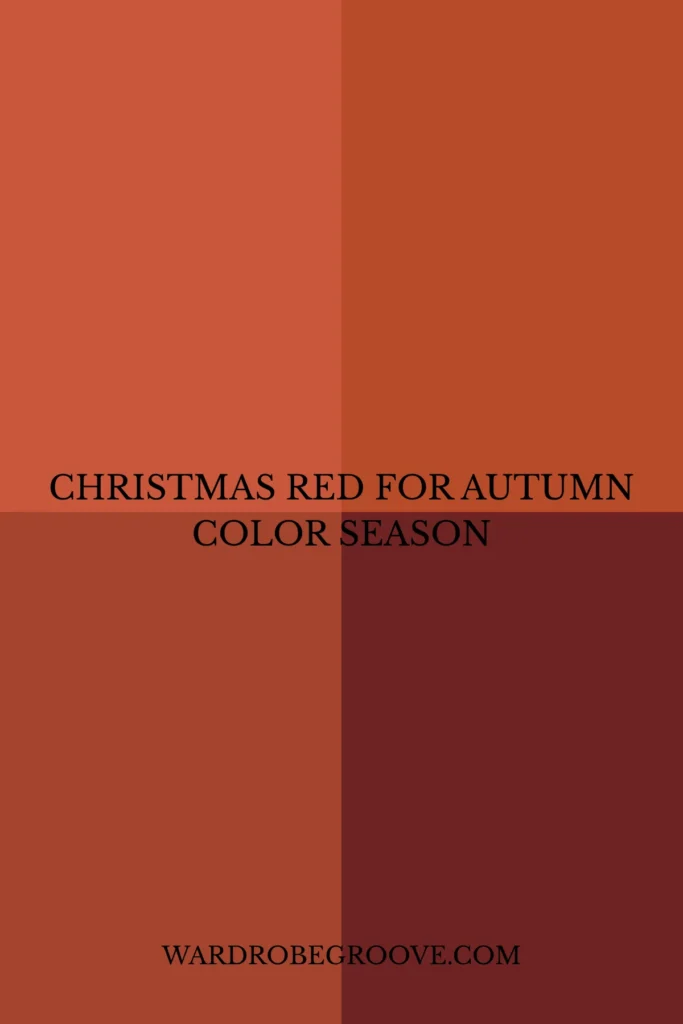
When you shop, hold the red up in daylight. If it looks like a ripe tomato, a brick, or a pot of paprika, it’s yours. If it looks like a cherry or a raspberry, put it back. For burgundy, choose the warmer, brownish kind. Skip cherry red, raspberry, and any red with a pink or purple cast.
2. Green: Olive, Moss, and Forest
Autumns wear green with yellow in it: olive, moss, and a deep forest green. They’re earthy and warm, and they’re exactly what Autumn coloring is built for.
Here’s the good news: this is the group where classic Christmas green is on your side. The pine and holly greens of a traditional Christmas tree are warm and a little yellow, and that’s the direction you want. The shade to be careful with is the one that’s trendy for the holidays, icy emerald and minty green. They carry blue, and blue drains a warm face. That’s why the green section matters for Christmas outfits for Autumn color season even though the answer feels easy.
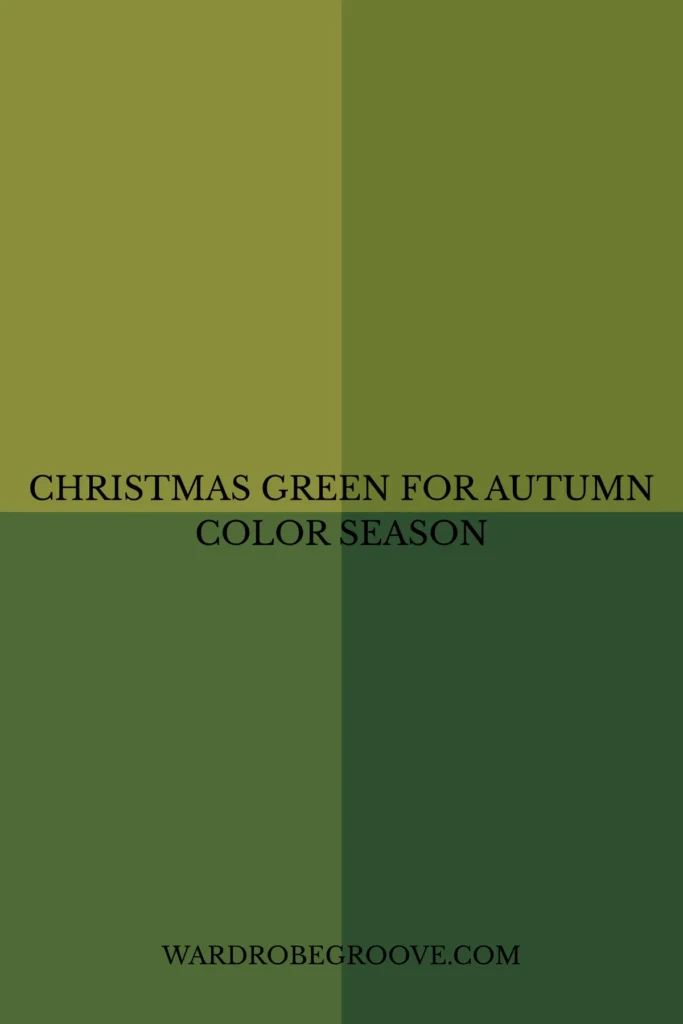
Look for greens that remind you of leaves, moss, or an evergreen branch in warm light. Skip icy emerald, mint, and any green that leans blue or looks cold in daylight.
3. Sparkle: Antique Gold, Brass, Bronze, and Copper
Autumn is the gold season. Antique gold, brass, bronze, and copper are all yours, and this is the one season where the answer to “which gold” is: nearly all of them.
Metals follow undertone. Gold belongs to the warm seasons, silver to the cool ones, and Autumn is warm. Warm metals make golden skin glow, which is why a gold sequin dress or a brass cuff looks so natural on you. Silver does the reverse. Shiny silver sequins and platinum jewelry look cold against a warm complexion, and silver tinsel is the easiest trap to fall into in December.
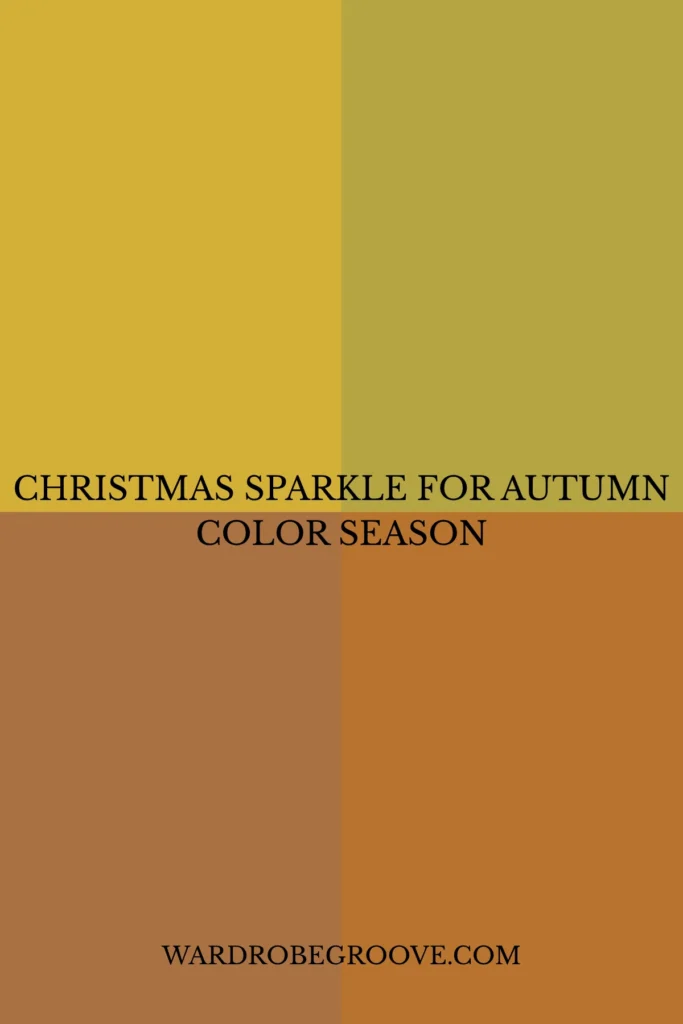
Buy gold sequins, bronze knits, and jewelry in antique gold, brass, or copper. For champagne, choose a golden champagne. Rose gold works in the warm, copper-toned version. Skip silver, platinum, white gold, icy champagne, and cool pink rose gold.
4. White and Cream: Cream, Ivory, and Oatmeal
Autumns wear cream, ivory, and oatmeal, whites with warmth in them, instead of stark white.
Stark optic white is a cold, high-contrast color, and it can make a warm complexion look yellow by comparison. Cream is the opposite. It sits softly next to golden skin and makes the whole outfit look settled instead of stark. A cream knit, an ivory satin blouse, or an oatmeal coat all work for Christmas outfits for Autumn color season, and they’re easy to wear under a gold or rust piece.
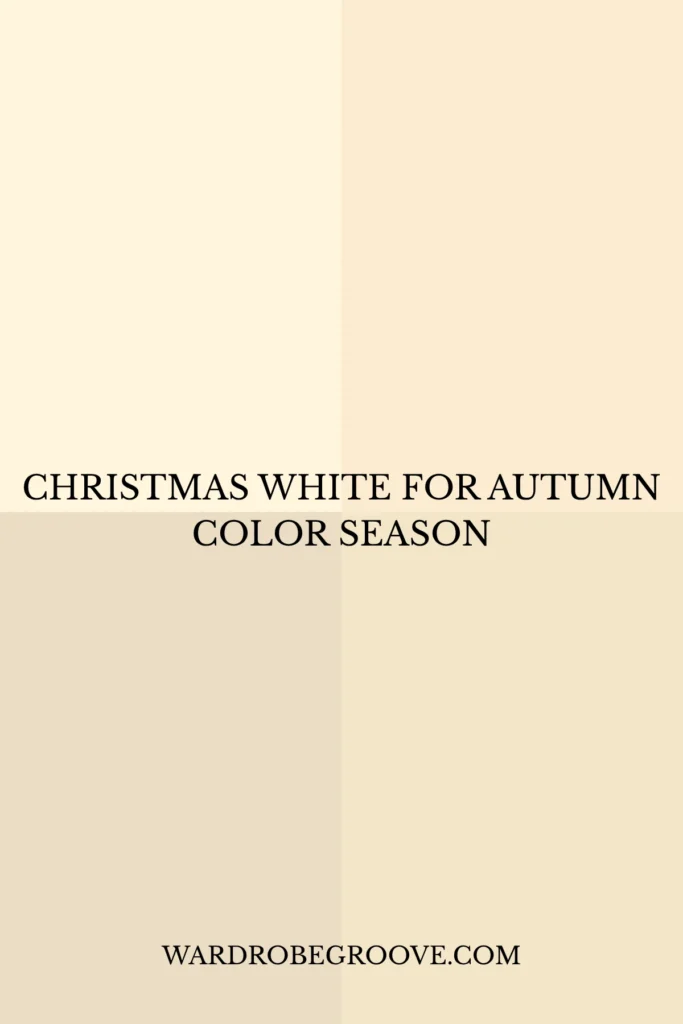
Look for a white with a visible hint of beige or yellow in daylight. Skip stark white and any gray-white that looks cool or bluish.
5. Deep Festive Tones: Chocolate, Warm Aubergine, and Dark Teal
Autumns go dark with chocolate brown, warm aubergine, and dark teal. These are the evening shades, and they carry as much drama as black does, in a warmer way.
At holiday parties, the usual dark choices are black and navy, and both are cool. Chocolate brown does the same job without the chill, and it looks rich against gold jewelry. A warm aubergine adds a festive, jewel-toned option that stays warm, and dark teal gives you a deep color with a little green in it. These are the shades that carry Christmas outfits for Autumn color season into the evening.
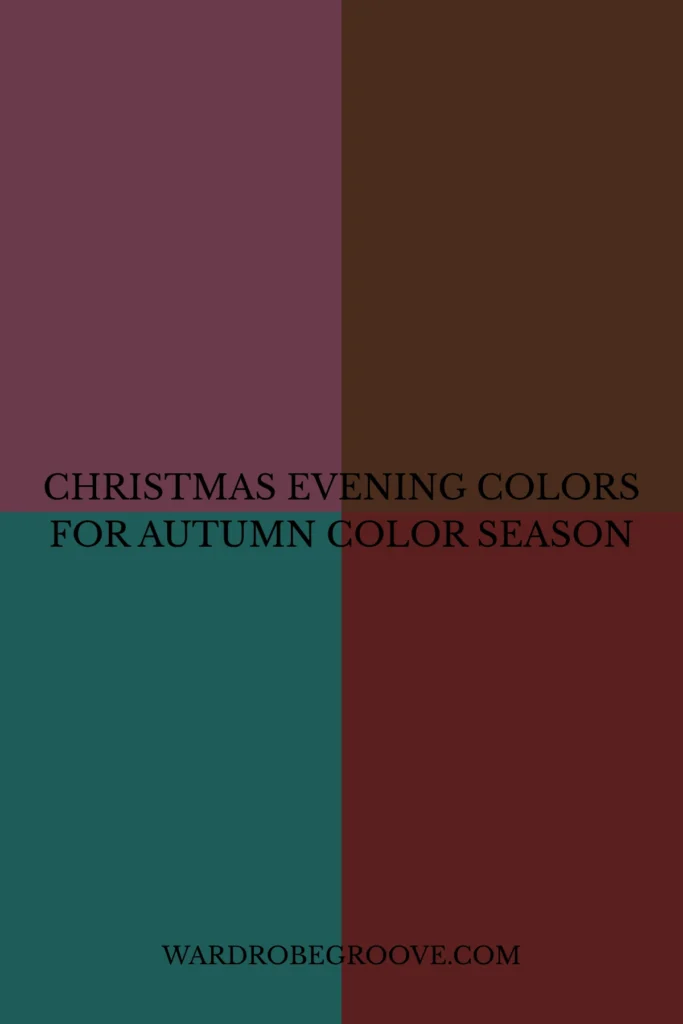
Choose a plum that leans toward brown or red, not blue, and a teal that looks like deep water with a hint of green. Skip stark black and cool, ink-dark navy.
The Right Version Is the Whole Strategy for Autumn Christmas Outfits
Christmas doesn’t ask you to give up red, green, gold, or white. It asks you to pick the version made for you: brick instead of cherry, olive instead of icy emerald, gold instead of silver, cream instead of stark white, chocolate instead of black. Each swap is small. Together they separate an outfit that looks festive from one that looks like you.
Autumn has an advantage here. The classic Christmas palette is already warm, so the work is mostly steering away from the cool trends that crowd the stores in December.
Of course, nothing is set in stone. Once you understand why each shade works, you can bend the rules on days when you want to.