Most women have had the experience of dyeing their hair a color they loved on someone else and watching it land completely wrong on them. The cut was fine. The shade was on-trend. And yet something about the face looked off: tired, washed out, a little older than yesterday.
That mismatch is almost always a color analysis problem. Your season points to a hair color zone that flatters you, and stepping outside it, especially across the warm/cool line, is what makes hair look wrong even when everything else is right.
Three rules govern this, and they apply to every season. Once you know them, the seasonal recommendations make sense as applications of the same logic, not twelve disconnected rules to memorize.
How color analysis decides what hair color flatters you
Color analysis is a system that sorts people into four seasonal types based on the natural coloring of their skin, eyes, and hair: Spring, Summer, Autumn, or Winter. Each season has a warm or cool foundation and a characteristic level of depth and brightness, and the colors that flatter you are the ones that match that foundation.
For hair specifically, three rules do most of the work:
- Warm versus cool is a hard line. Warm seasons (Spring, Autumn) need warm hair colors. Cool seasons (Summer, Winter) need cool ones. There’s no soft middle. A golden honey blonde on a cool summer reads as wrong in a way that’s hard to explain but immediately visible.
- Light versus dark is a soft slider. You can move one or two shades lighter or darker than your natural color and still stay in your zone. Beyond that, you start fighting your face.
- Your natural hair color is almost always your best zone, or very close to it. Nature got it right. The job isn’t to overhaul. It’s to refine.
There’s one useful exception worth flagging upfront: cool summers can sometimes look striking when they go darker than their natural color, even though summer is a generally light season. The cool direction holds; only the lightness slider shifts.
Now let’s walk through each season.
Spring hair colors: warm and bright
Springs are warm and clear. Their natural coloring tends to glow in golden, honey, and copper-leaning hair colors, and falls flat in anything ashy.
The Spring hair zone runs from light golden blonde through warm light brown, with strawberry blonde and copper as natural fits. The defining quality is warmth with brightness. Think colors that look sunlit, not muddy.
What goes wrong on a Spring is almost always coolness. Ash blonde, mushroom brown, and cool dark browns turn a Spring’s skin sallow because they pull warmth away from a face that needs it.
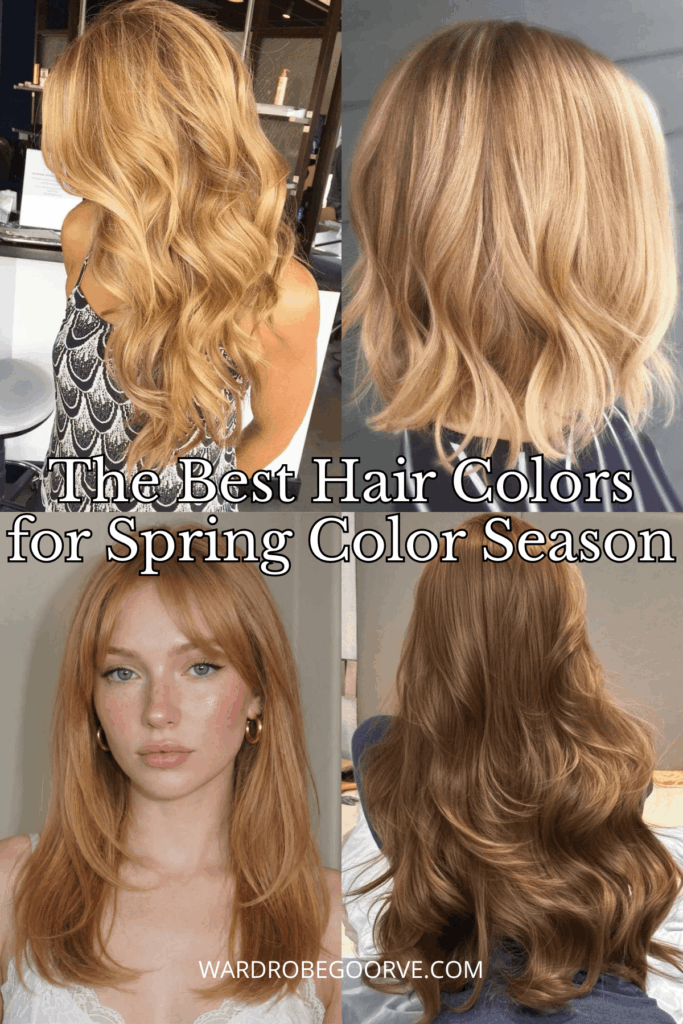
The three Spring subtypes shift the lightness slider:
- Light Spring stays at the lightest end: golden blonde, light strawberry, warm light brown.
- Warm Spring is the richest and most coppery: strawberry, auburn, warm golden brown.
- Bright Spring can handle deeper warm browns because of the brightness in the eyes and contrast in the face.
If you’re a Spring debating whether to add highlights, keep them golden. The mistake is reaching for the cool blonde shades trending in salons. They almost always read wrong on Spring skin.
Summer hair colors: cool and soft
Summers are cool and soft. Their best hair colors are ashy and gentle. Anything golden or coppery overpowers their delicate coloring and breaks the harmony of the face.
The Summer hair zone runs from ash blonde through cool light brown to mushroom and ash brown. The defining quality is coolness without harshness. Summers don’t suit aggressive contrast; their coloring is blended, and their hair color should match.
What goes wrong on a Summer is warmth. Honey blonde, golden highlights, copper tones, and warm chocolate browns all clash with cool undertones. The face starts to look ruddy or tired.
Here’s where the rule-bender comes in: a True Summer, sometimes called Cool Summer, can often look great in a cool dark brown, even though summers are generally a lighter season. The key word is cool. Going darker works; warming up the color does not. A cool espresso brown on a Summer can read sophisticated and deliberate. A warm chestnut on the same person looks off.
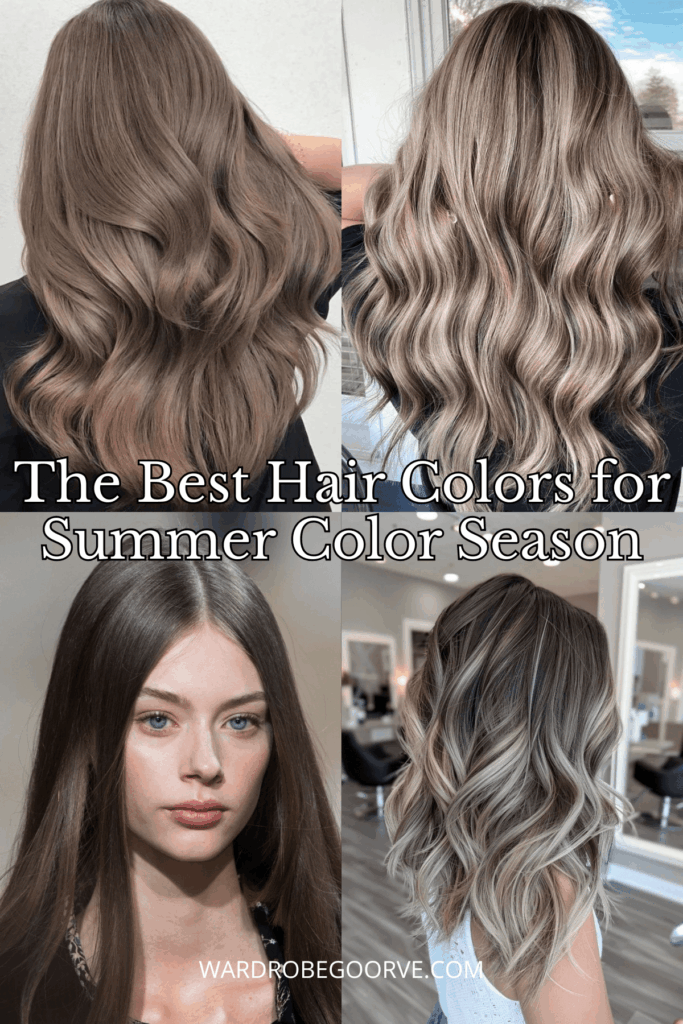
Subtype guidance:
- Light Summer stays lightest: ash blonde, very light cool brown.
- True Summer has the most range, including the darker cool browns mentioned above.
- Soft Summer sits in the muted middle: mushroom, soft ash brown, dusty light brown.
The substitute for golden highlights, if you want dimension, is babylights in a cool tone. Same brightening effect, none of the warmth that fights your face.
Autumn hair colors: warm and rich
Autumns are warm and deep. Their best hair colors are the richest, most pigmented warm shades: auburn, chestnut, copper, warm chocolate. Ash flattens an Autumn instantly.
The Autumn hair zone runs from medium warm brown through deep auburn to rich chocolate, with copper and rust pulling the brightest end. The defining quality is warmth with depth. Autumns can handle saturation that would overwhelm a Spring.
What goes wrong on an Autumn is almost always coolness or excessive lightness. Platinum blonde, ash blonde, and cool dark brown all drain the warmth that gives an Autumn’s face its glow. The skin starts to look gray.
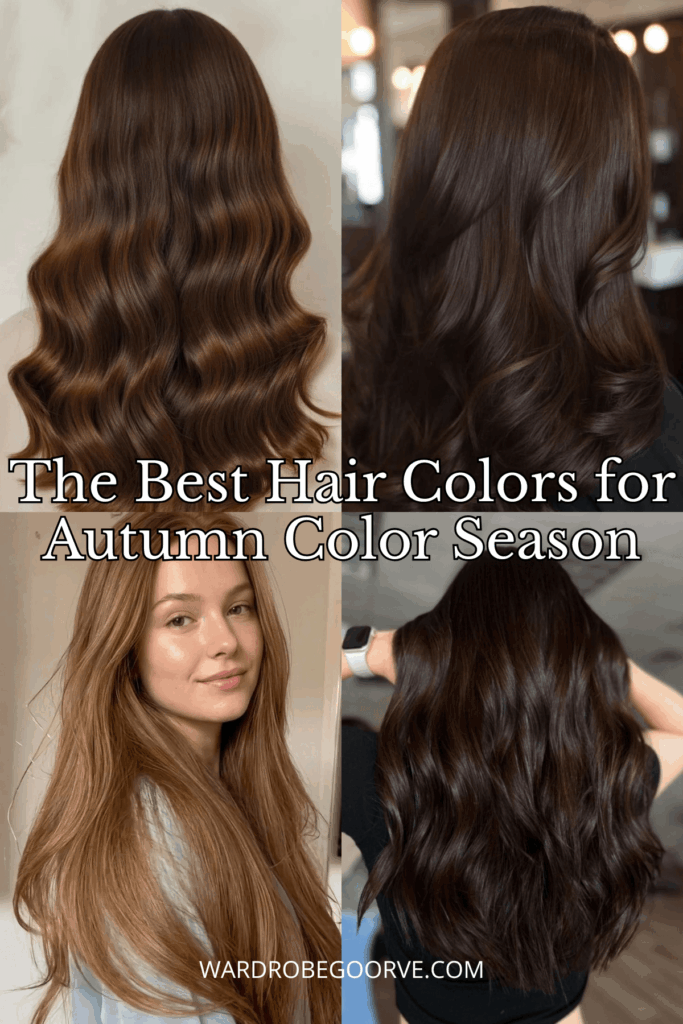
Subtype guidance:
- Soft Autumn stays in the softer, lighter end: warm light brown, soft auburn, golden brown.
- Warm Autumn goes most coppery and golden: auburn, copper, rich warm browns.
- Deep Autumn takes the darkest shades: deep chocolate, dark auburn, almost-black browns with warmth.
If you’re an Autumn who’s been talked into ash highlights, you’ve probably already noticed they don’t work. The fix is going back warm, not adjusting the lightness.
Winter hair colors: cool and deep
Winters are cool and dramatic. Their best hair colors are the deepest cool shades: cool dark brown, espresso, blue-black, and cool ash for the lightest types. Warm browns and golden tones look muddy on Winter skin.
The Winter hair zone runs from cool medium brown through espresso to true black, with room for dramatic contrast that other seasons can’t carry. The defining quality is coolness with depth and clarity.
What goes wrong on a Winter is warmth. Honey, caramel, golden brown, and warm chocolate all fight Winter coloring. The face loses its sharpness and starts to look washed out. That’s the opposite of what these warm shades are meant to do.
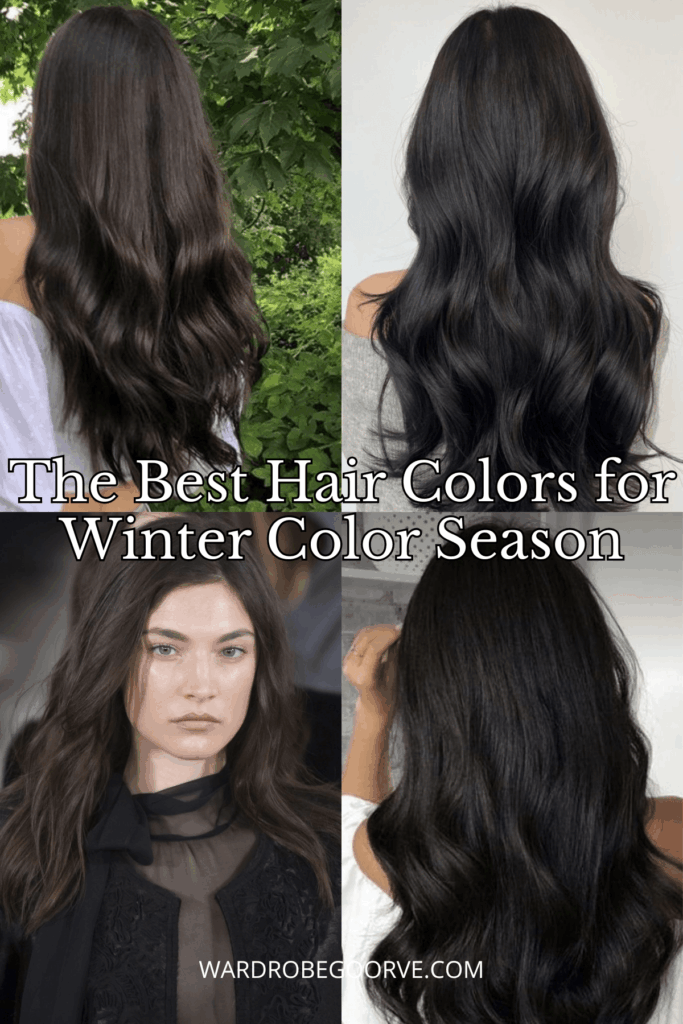
Subtype guidance:
- Bright Winter can handle cool platinum if the natural hair is very light, but most Bright Winters look best in cool dark brown to black.
- Cool Winter (True Winter) sits in the cool brown to espresso range with sophisticated cool tones.
- Deep Winter goes darkest: true black, blue-black, deepest espresso.
The Winter season is also where the next mistake does the most damage. And it’s the biggest one in this whole post.
The biggest hair color mistake women make after 40
A lot of women start lightening their hair in their forties because they’ve been told it’s rejuvenating. It isn’t. In most cases, it makes them look older, not younger. On a Winter, it’s especially harsh.
The reasoning behind the myth sounds plausible: lighter hair softens the face, so it must take years off. But what it actually does is flatten the contrast between your features and your hair, and that contrast is part of what reads as alive on you. A Deep Winter with naturally dark hair has a face built for high contrast. Lighten the hair and the face loses its frame. The features stop popping. The whole look goes muted in a way that doesn’t read soft. It reads tired.
It gets worse when lightening comes paired with warming up the color. On a cool-toned woman, that’s two mistakes at once: she’s drifting lighter than her zone and crossing the warm/cool line. Now her hair is fighting both her natural depth and her undertone, and her skin will look every bit as old as the lightening was supposed to fix.
The rule holds: your natural hair color is almost always your best zone, or very close to it. The most rejuvenating thing a woman over 40 can usually do is stay there. If your natural color is cool dark brown, your best version at 50 is still cool dark brown: covered for grays, refreshed for shine, but not lightened, and not warmed.
If you do want a change, apply the three rules. Stay on your warm/cool side. Move one or two shades at most. Treat your natural color as the anchor, not the starting point you’re trying to escape.
The bottom line
Hair color works the same way the rest of style does in a color analysis framework: enhancement, not transformation. Your natural coloring already tells you which zone flatters you, and the job is to stay in it, not to chase a shade that worked on someone with completely different undertones.
Stay on your warm/cool side. Move gently on the lightness slider. Trust that your natural color is closer to your best color than the trend cycle wants you to believe.